Mosquito Control
Break the Mosquito Cycle at Its Source
Mosquitoes multiply in standing water, in drain traps, plant trays, and exterior containers that hold rainwater. Peak activity follows warm, humid weather. Our approach starts with removing breeding sites, then applies targeted treatments to lawns, foliage, and drainage channels around homes, schools, and outdoor commercial venues.
Our Treatment Process
Three Steps for Rapid Mosquito Control
01
Source Reduction
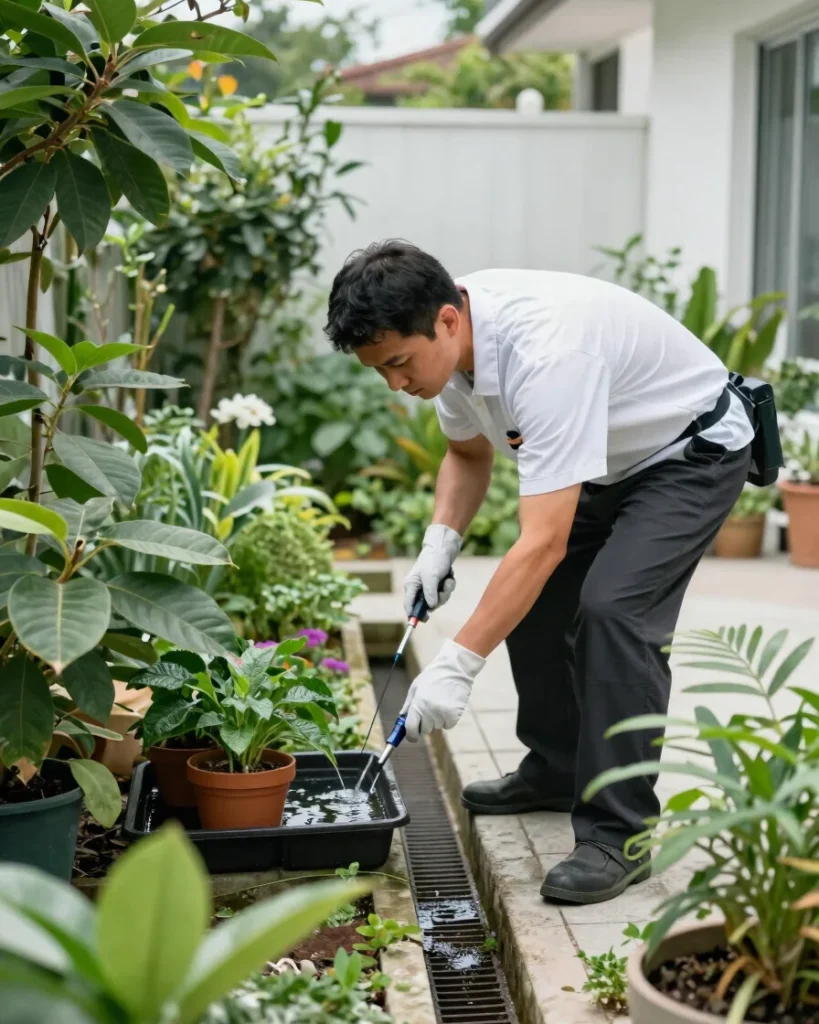
We inspect drain traps, plant trays, gutters, and exterior containers, removing or treating standing water that supports mosquito larvae.
02
Larvicide and Perimeter Treatment
Larvicides are applied to drainage channels, and barrier sprays are applied to foliage and sheltered perimeter zones where adult mosquitoes rest.
03
Timed Thermal Fogging
Thermal fogging and cold aerosol misting provide rapid adult knockdown in outdoor areas, scheduled for periods when activity is highest and the site is safe to occupy after treatment.
FAQs and Prevention
Questions About Mosquito Treatment
How often is fogging needed? Fogging is usually scheduled as a short-term measure during peak activity, while larvicide and barrier sprays are typically applied on a routine seasonal schedule. The right frequency depends on the site, rainfall, and the amount of standing water present. Is treatment safe for families and occupants? Treatments are applied according to label directions and timed so occupants can return once the recommended re-entry period has passed. Please tell us about any sensitivities, pets, or sensitive areas before the visit.
Prevention starts at home and on site. Empty buckets, tyres, and pot saucers each week. Clear gutters and drain traps so water does not pool. Trim tall grass and dense shrubs where mosquitoes shelter. Cover water storage tanks securely. These steps reduce breeding sources between treatments and help the service last longer.