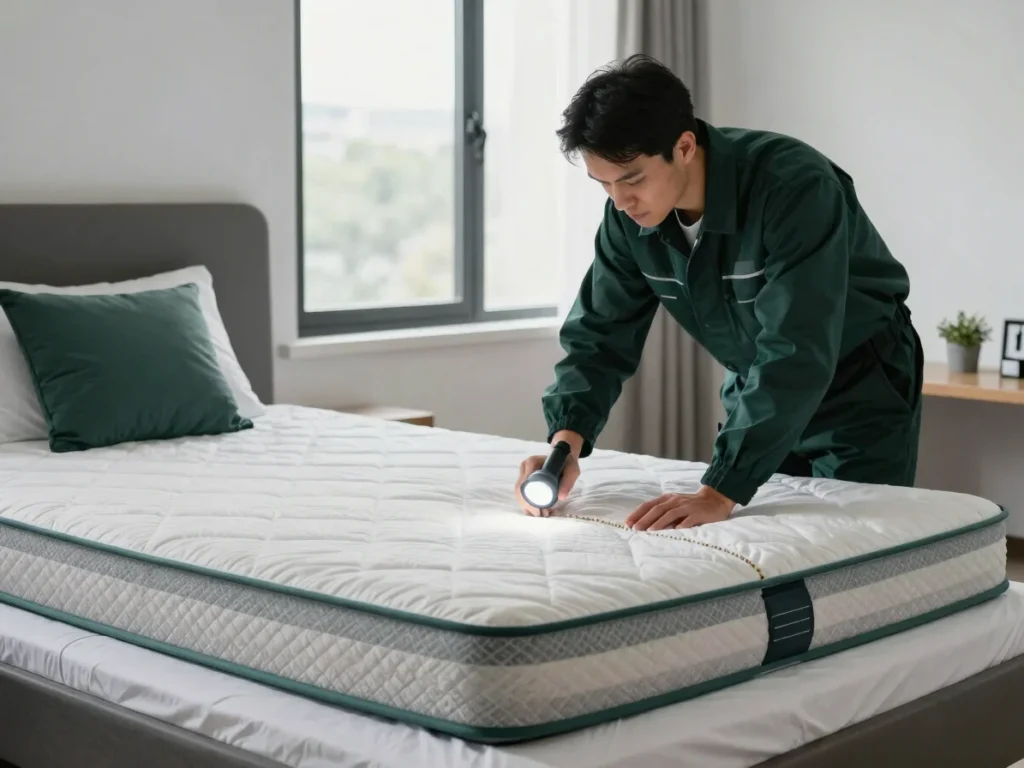
Bed bugs usually feed at night and hide close to where people sleep. Look for small rust-colored spots on mattress seams, dark fecal marks on fabric, shed skins, and a sweet musty odor in heavily affected areas. They often arrive in luggage, used furniture, or shared rooms, so inspection starts with the bed frame, headboard, baseboards, and storage zones.
Bag bedding for laundering, declutter floors, and move items away from walls. Preparation checklists are shared before the visit so the room is ready on arrival.
02
Deep steam and misting
Heat is applied to mattress seams, folds, and cracks, followed by targeted insecticide application to hidden harborage points along baseboards and furniture joints.
03
Seal and treat seams
Headboards, bed frames, and skirting are treated and sealed where practical, reducing places where insects can hide between visits.
04
Verify and follow up
A secondary verification visit checks for activity and repeats treatment where needed. Follow-up timing depends on the room, the level of activity, and the treatment used.
Prevention tips
Keeping rooms clear after treatment
Laundering bedding at high temperatures helps remove insects and eggs from linens and clothing. Mattress encasements can limit hiding places once a bed has been treated, and quarantining luggage or stored items in a separate area reduces the chance of transfer between rooms.
For hotels, hostels, and residential properties, regular checks of mattress seams and guest room furniture help catch early signs. Staff who report bites or spotted fabric promptly allow the affected room to be inspected before activity spreads.